
Quality space is tight, and clients want flexibility: what that means for occupiers in Edinburgh
Flex is no longer a “nice to have”, it’s how offices are being chosen.
by Valentina Buschittari, General Manager at the Auction Rooms
Over the last few years, businesses are no longer comparing offices purely by square footage and headline rent. They are comparing how quickly teams can get set up, how easily space can flex with demand, and how well the workplace supports people.
That is exactly why flexible workspace has moved from the margins into the mainstream.
I have seen this first-hand over the past two years managing The Auction Rooms. When we opened our doors, we reached 90% occupancy within six months. What surprised me most was not just the speed of demand, but what clients were actually choosing us for. It was rarely a single feature. It was the confidence that everything would be taken care of, and that the workplace would feel right for their people from day one.
CBRE’s UK research supports what we see on the ground. Their UK Real Estate Market Outlook 2026 points to a market where high quality, well-located office supply remains tight, and demand continues to concentrate around the best spaces.
“There is only 1.3 years of supply currently under construction across the whole of the UK.”
CBRE Research, UK Real Estate Market Outlook 2026
“Demand will be constrained by a lack of availability of grade A space in prime locations in most UK markets.”
CBRE Research, UK Real Estate Market Outlook 2026
At the same time, CBRE’s UK Flex Market Update (Q3 2025) describes how flex is becoming a bigger component of occupier portfolios, driven by cost, speed, reduced capital expenditure, and paying for space in a way that aligns with real utilisation.
“Companies are increasingly opting for flexible solutions, expected to constitute 29% of portfolios by 2029, up from 21% in 2025.”
The above is especially relevant in Scotland. Ashleigh Corbett, Head of Flex Scotland at CBRE, says demand has surged since the pandemic, as organisations prioritise agility, experience and wellbeing, but that Edinburgh and Glasgow remain behind other UK markets in flex provision, and the next few years will be critical in how Scotland responds.
“In Edinburgh, flexible office space accounts for less than 3% of total office stock, with Glasgow even lower.” Ashleigh Corbett, Head of Flex Scotland, CBRE, Scottish Business Insider
When the market moves quickly and supply is tight, the winners are typically the workplaces that can offer two things at once, quality and flexibility.

What “value” really means in flex
One of the most common misconceptions is that flex is “just hospitality”. In practice, many clients, particularly larger organisations, are buying a managed, de-risked operating model.
They want speed, consistency, and a workplace that runs properly without pulling internal teams into endless operational detail.
"What we hear consistently from occupiers in Edinburgh is that they are no longer choosing a desk or a floor, they are choosing an operation,” says Zoe Ellis-Moore, CEO and founder of Spaces to Places marketing agency.
“The question is not just 'does the space look good?' but 'will it work, every day, without me having to think about it?' The spaces that answer that question with confidence are the ones filling fastest. When a space like The Auction Rooms genuinely delivers at that level, operationally and experientially, it stands apart, not by marketing, but by reputation."
At The Auction Rooms, we describe client value in four connected layers.
1) Business value (operational performance)
A workplace that runs properly day to day, with issues handled quickly and discreetly, consistent standards, and a team that owns delivery.
2) Economic value (commercial impact)
Less capex, fewer hidden operational line items, reduced internal admin burden, faster mobilisation, and the ability to scale without disruption.
3) Experiential value (human contribution)
A calmer, better environment, premium shared spaces, thoughtful service, and the small details that make work feel easier and more intentional.
4) Strategic contribution (what enterprise decision-makers evaluate)
Operational readiness, compliance, IT and security expectations, meeting space and hybrid support, and an environment that supports retention.
Why this matters for corporate decision makers
In many RFPs, the evaluation quickly moves beyond “what’s the rent” to questions like,
How ready is the space for day one (IT, security, resilience, compliance, etc)?
Does it support productivity? Are the spaces optimised for focus, meetings and hybrid work patterns?
Is the experience good enough to bring people in (premium shared spaces, hospitality, high quality food and beverages)?
Will it support talent attraction and retention, wellbeing, and sustainability?
Does it have destination appeal?
These factors are no longer nice extras, but rather they are now part of how workplaces are chosen. Ashleigh’s commentary echoes this view, as she writes, “the office is no longer simply a place to be productive, it’s a reflection of a company’s identity.”
We are grateful for the insight, and for CBRE continuing to push the Scottish market forward with clarity and ambition.
“Take The Auction Rooms in Edinburgh as a prime example of thoughtfully designed flex space.”
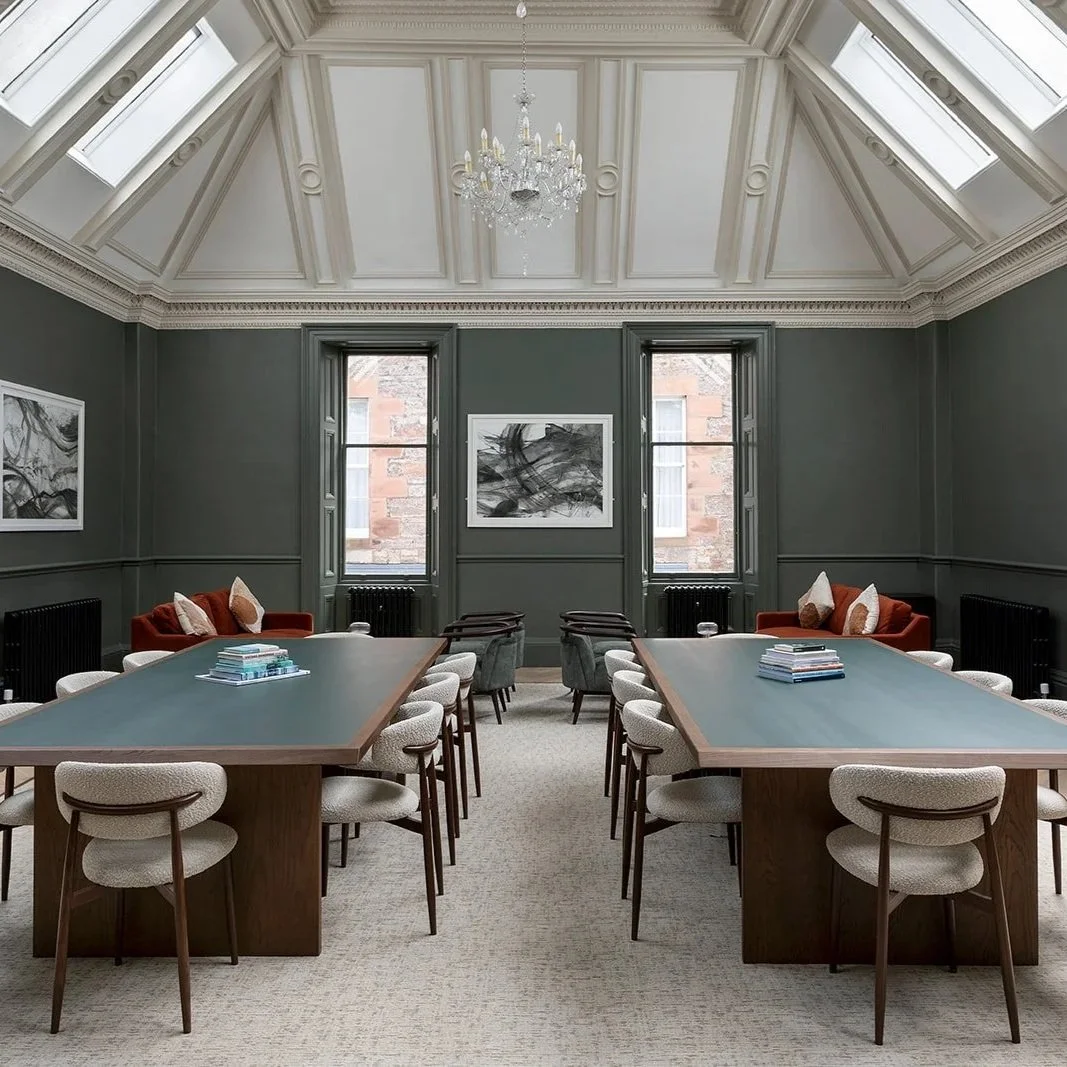
If you would like to explore workspace options in Edinburgh, we are always happy to arrange a tour, or a short call to understand your brief.
Resources
CBRE, UK Real Estate Market Outlook 2026: https://www.cbre.co.uk/insights/books/uk-real-estate-market-outlook-2026
CBRE, UK Flex Market Update Q3 2025: https://www.cbre.co.uk/insights/reports/business-insights-uk-flex-market-update-q3-2025
Scottish Business Insider, Ashleigh Corbett (CBRE), “The future of flex space in Scotland”: https://www.insider.co.uk/news/future-flex-space-scotland-35224709